

How To Draw A Carousel Horse
How to draw a equus caballus
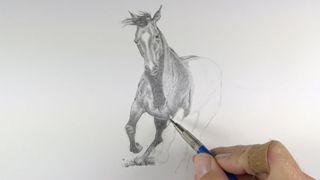
Take you always wanted to know how to draw a equus caballus? Well, y'all've come to the right place! Nosotros know that learning how to describe animals is no like shooting fish in a barrel feat, merely in this handy step-by-step guide, we volition teach y'all how to draw a horse and aid you to perfect your technique.
We accept gathered all the tips, techniques, and tutorials to help you draw a horse and to boom those finicky bits, like the legs, spine and caput. Just watch the video below to become a detailed overview of how to draw a horse, and and so scroll down when you're set to read a step-by-step to master those finer details.
If you primary how to describe a horse and fancy trying your skills with some other drawings, then check out our extensive collection of how to draw tutorials to acquire how to draw everything from animals, humans, landscapes and flowers.
How to draw a horse: Step by step guide
If you tin get your head around the anatomy of a horse, and then drawing i will exist far easier for you. Understanding the mechanics of a horse volition allow you to create a more accurate and realistic cartoon of a horse, which is why we are starting our step-by-pace by exploring a horse's skeleton.
01. How to draw a horse's legs
(Image: © Bobby Chiu)
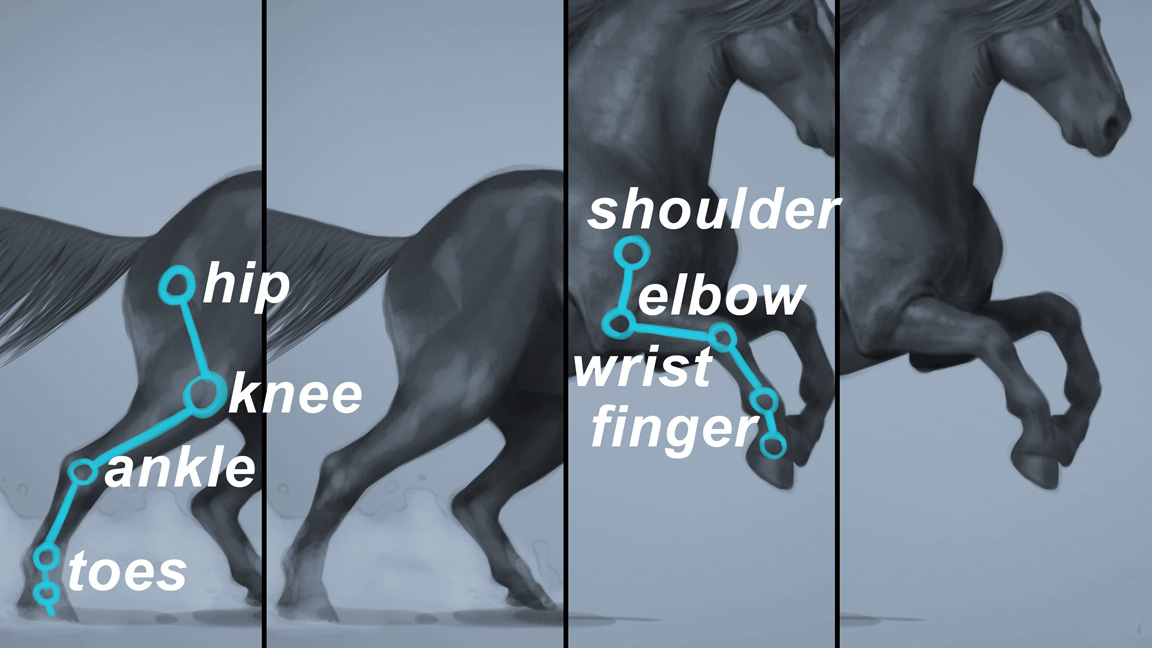
Despite popular belief, a horse'due south knees are in fact not backwards-facing — they're just not as obvious as u.s. humans. The aforementioned goes for a equus caballus's shoulders, they aren't every bit distinct and are really more front-facing.
A horse's hoof is very structurally similar to a man's centre finger or toe. Your process of cartoon a horse will make a lot more sense when you understand these central points.
02. How to depict a horse spine
(Image: © Bobby Chiu)
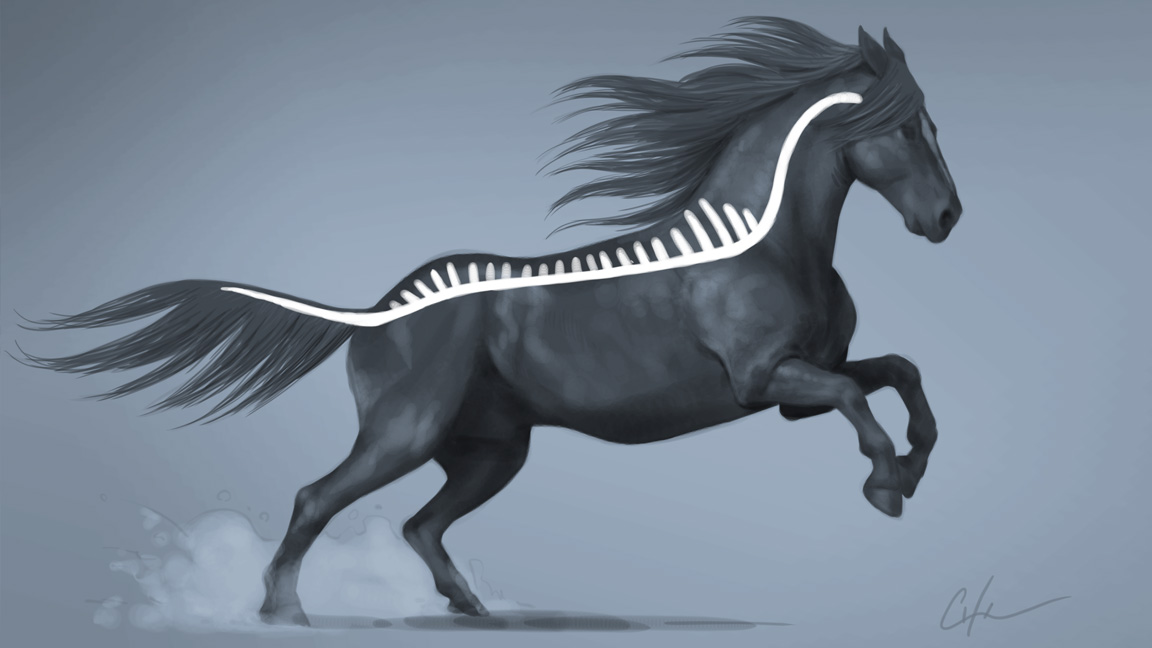
The curve of a equus caballus's back is non made by a curved spine. In fact, the spine is quite straight – the curves you see are the spinous processes, which are projections on each vertebra that muscles connect to. Above the shoulders, the spine runs closer to the heart of the cervix than the dorsum. By knowing where a horse's cervix bends from, you will be able to draw a equus caballus's neck improve in different positions.
03. Sympathize the primary skeleton

(Image: © Bobby Chiu)
A horse'south rib cage has a similar shape to a human's, but call up ribs don't extend to the bottom of the abdomen. Also, muscle, fat and skin can make the rib cage look bigger than it really is.
What about a equus caballus's caput? Well, a horse's skull is triangular, with a large jaw that has a wide area for muscles to attach to. Meanwhile, a equus caballus's pelvis is flatter than a human being'south considering a equus caballus doesn't stand up upright, so its pelvis doesn't bear weight.
04. Depict the main shapes of a horse

(Image: © Bobby Chiu)
We're now fix to put pen to paper and draw a horse. Start with the front half of the trunk, which is kind of bean-shaped. And so nosotros have the front and dorsum sides of the equus caballus, which feel like padding around the edible bean.
The neck has to be thick considering of the muscles required to concord the head up. For the equus caballus's head, we can follow what nosotros did previously with the skull and add some big muscle shapes towards the back of the jaw.
05. Create a loose gesture drawing
(Prototype: © Bobby Chiu)
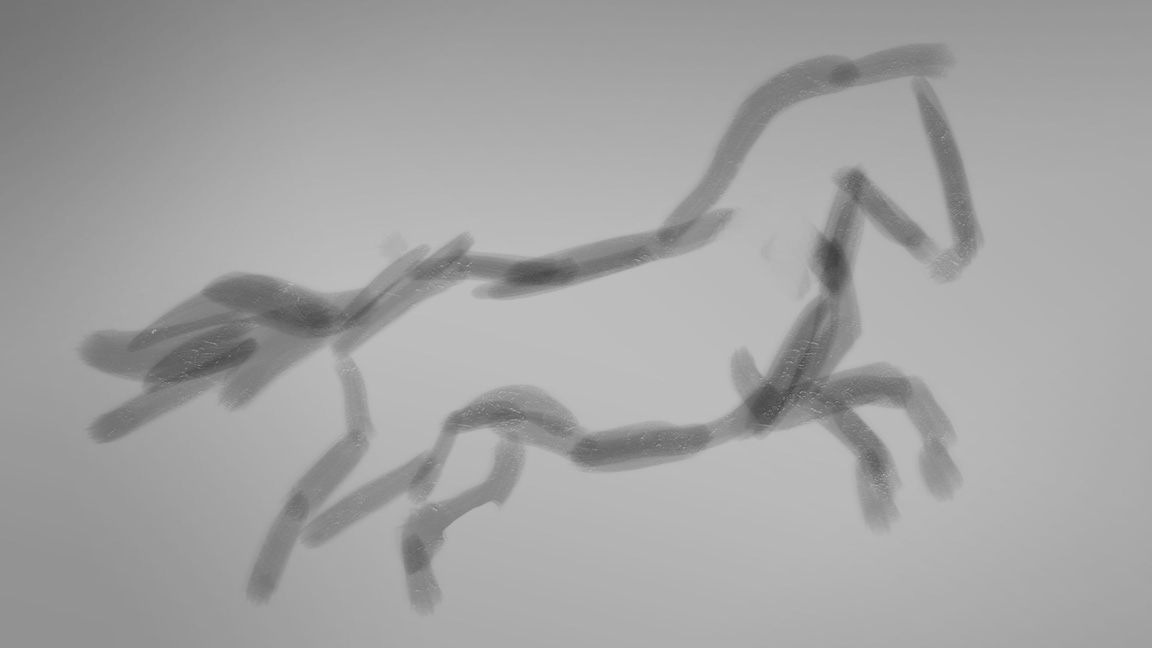
Now that nosotros sympathize the virtually important parts of a equus caballus and accept the basic shapes down, we can create a loose sketch. It'southward almost similar a cave drawing, only you can see indications of the directions of the legs, the angle of the pelvis, the rib cage and midsection.
The head and neck are strongly indicated and the position of the tail shows that the horse is in motion. The gesture sketch communicates the most vital information well-nigh your discipline.
06. Focus on sketch language

(Epitome: © Bobby Chiu)
Sketch linguistic communication lets us take visual notes and so that we can effectively finish our work later on. In this example, nosotros want to bespeak landmarks where the horse's bones influence the skin surface the most, such as at the joints. This is where the indications of bones are clearest and lead into the muscular areas. We can utilize these indications to suggest the directions of the basic besides.
07. Redraw the horse in detail

(Epitome: © Bobby Chiu)
Authentic landmarks in the horse sketch make this task much easier. Look at every simplified line and see how more than anatomical data can be added. Utilize directly lines for muscles that are stretched or taut with tension, and curved lines for parts that are softer or beingness compressed.
Add together subtleties to the muscles and detail to the horse's features, to make the anatomy easier to read. While y'all're doing this, take intendance to maintain the essence of the original sketch.
08. Look at the subtle angles of your equus caballus
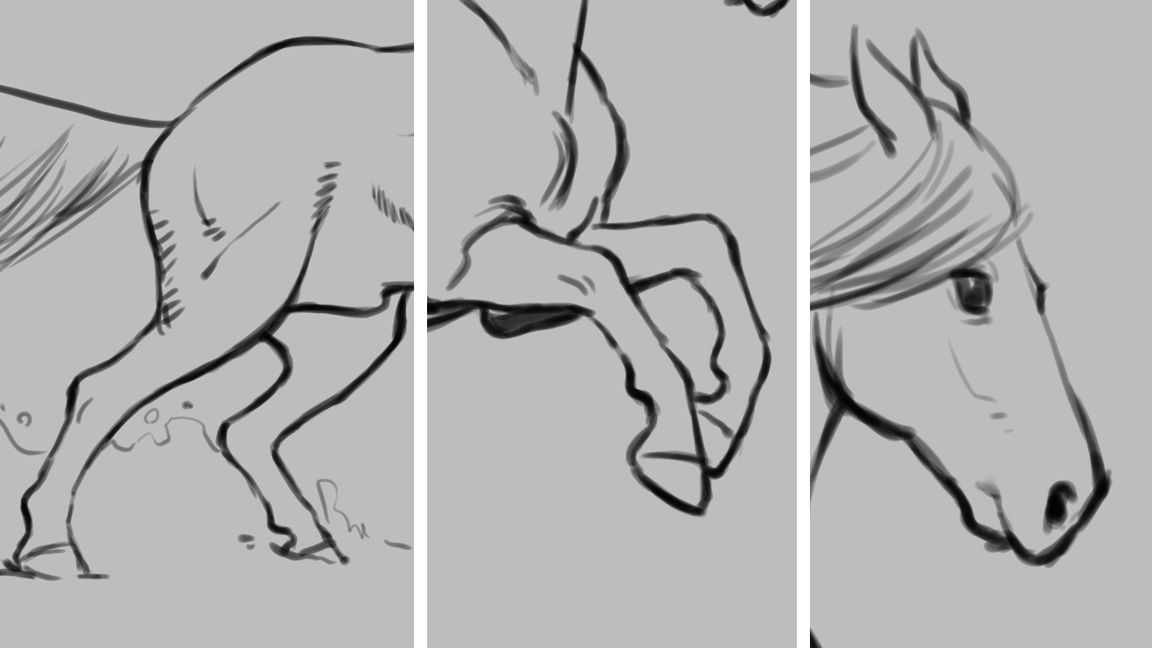
(Prototype: © Bobby Chiu)
Perfect profile or head-on drawings can feel graphic and staged. Think about subtle angles: for example, the horse'due south optics and the position of its caput could be well-nigh in profile, with a hint of the other eye is visible to add together more than life. Information technology'southward also of import that the positions of the front and back pairs of legs are subtly different from one another – making them identical makes the horse look very robotic.
09. Think about line weight

(Image: © Bobby Chiu)
Line weight tin communicate many things. We tin can use it to emphasise the size of the equus caballus's body. Line weight tin can also dissever i element from the other, like in the front end legs. Areas where basic are indicated are harder, which gives them sharper shadows, which tin be represented with stronger line weight. For more than subtle lines such every bit muscle definition, draw a few thin lines side by side to point a softer line.
ten. Add context with secondary action
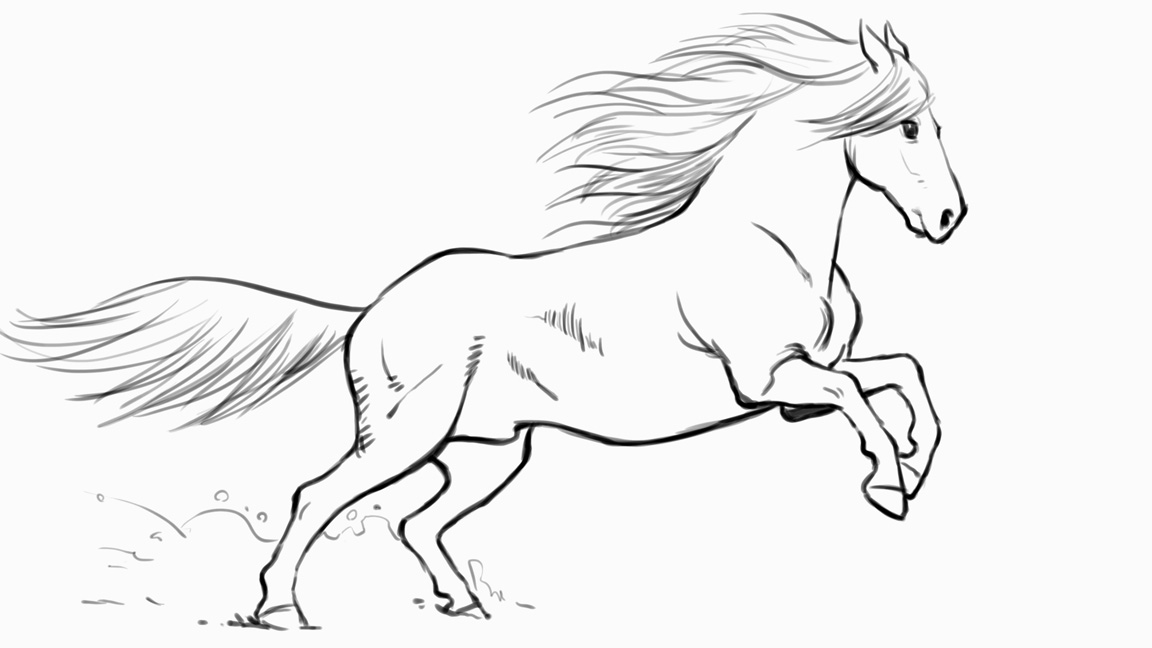
(Prototype: © Bobby Chiu)
The final step in how to draw a horse is to add secondary actions, such as the mane and tail hair blowing in the wind. These elements add dynamics to our drawings, and are vital for showing move in activeness scenes.
When showing secondary action, call back to consider line weight and where shadows will autumn. Secondary action can also refer to external elements that are affected past the horse, similar a cloud of dust that the horse kicks upwardly as it gallops.
Related articles:
- How to depict a face
- How to draw a cat
- The best pencils for colouring, drawing and sketching
Related articles

Source: https://www.creativebloq.com/how-to/how-to-draw-a-horse
Posted by: smithwhossel.blogspot.com
0 Response to "How To Draw A Carousel Horse"
Post a Comment