

How To Capture Movement In Drawing
As an creative person, many of usa are drawn to expressing ideas through character design. I'one thousand constantly seeking to improve, and over the years I've picked upwards some helpful tricks in designing more appealing and expressive characters. It's important to design not only how your figures await, but besides how they tell a story with their gestures and movements.
This is especially crucial in the animation industry because the characters you'll be conceptualising are intended to perform as though they were an actor in a moving-picture show or TV show. Hither are some tips on how to depict a more engaging character.
01. Describe a line of activeness
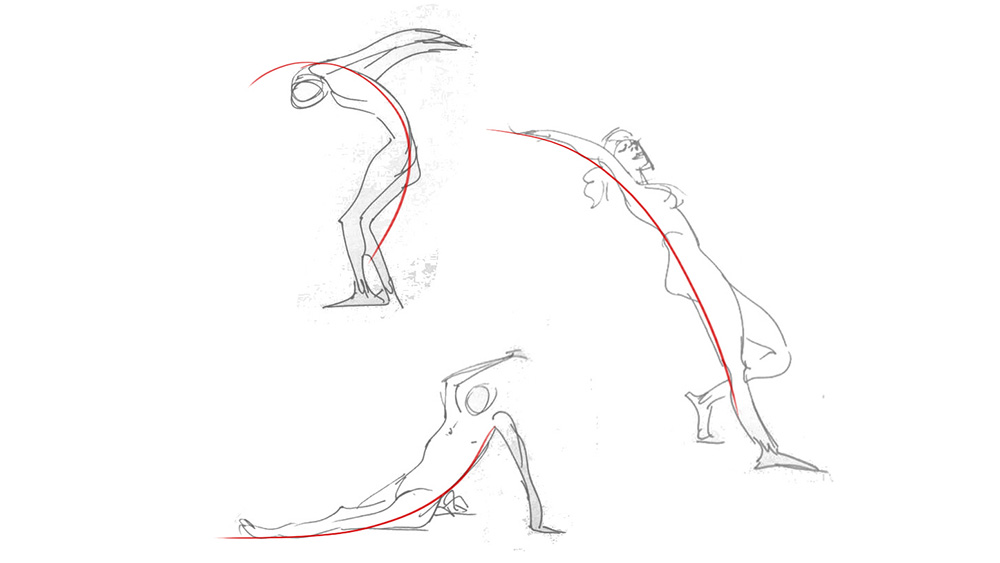
Envisioning a unmarried line overlaying your drawing can be a simple way of creating a feeling of motion. This line of activeness can either be straight or curved; both tin give a different feeling of movement. While a straight line is usually very fast and straight, a curved line can create a more graceful mood. Withal, it's all-time to avoid a perfectly directly vertical line of action, which may brand a drawing feel static.
02. Show what the character is thinking
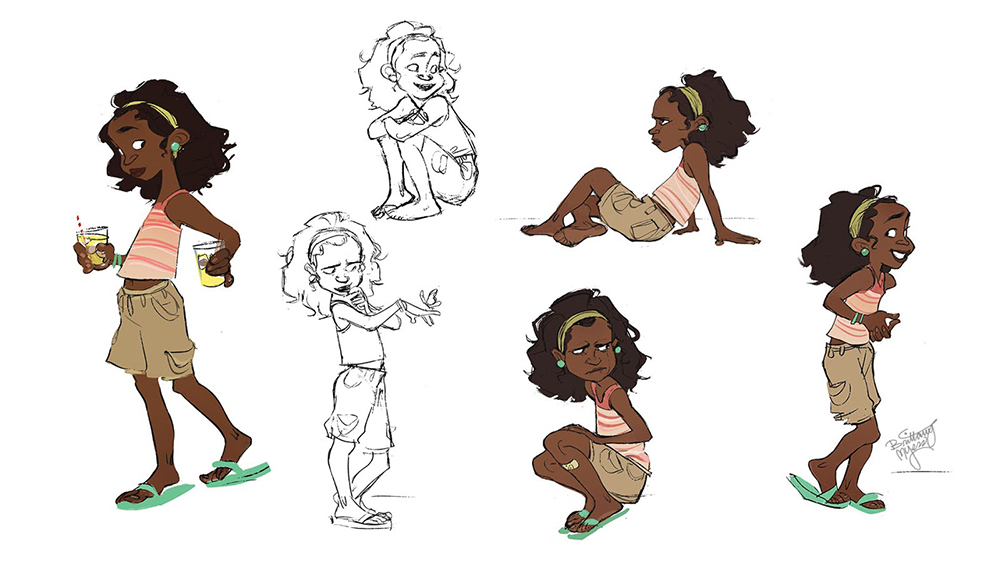
Just as we imagine our favourite Tv set and film characters to be real, nosotros should try to imagine the characters we create accept minds of their ain. If a graphic symbol in a drawing is moving or acting, they should have a reason for doing so.
Whether it be a broad action such as sprinting or a subtle mannerism, such as twirling a strand of hair, the character being presented would most probable accept a conscious or unconscious reason for doing so. Keeping this in mind will help you brand your character feel more interesting and relatable.
03. Dissimilarity straights and curves
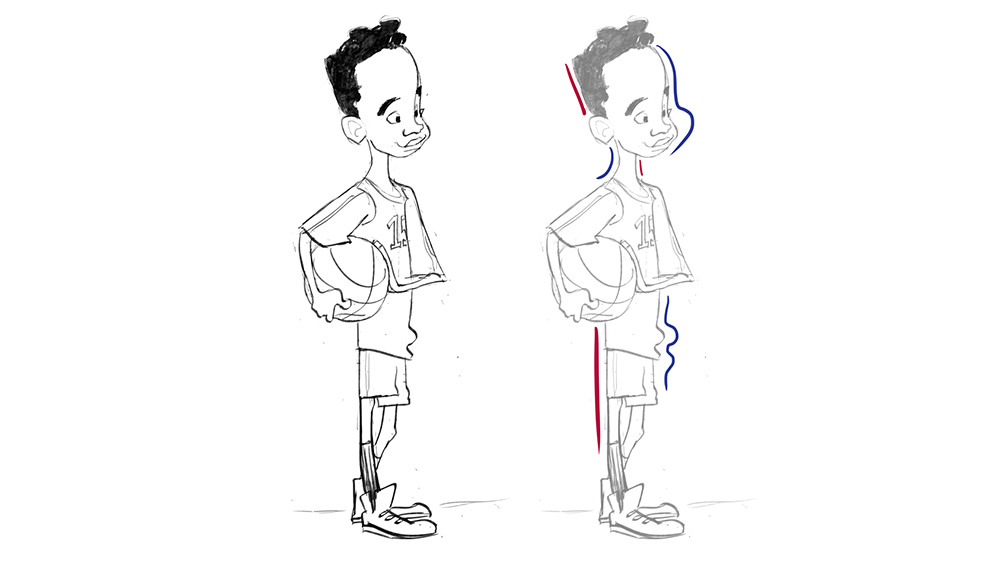
The dissimilarity between directly lines and curved lines is an essential pattern element. A sketch made up of directly lines would feel too tense, while a drawing using mostly curved lines would lack structure.
Curves are more often than not used to propose the more fleshy part of the figure, whereas straights are more commonly used to imitate stable and solid segments. For instance, compare the use of a straight line for a character'south back and the soft bend of their stomach.
04. Draw from life
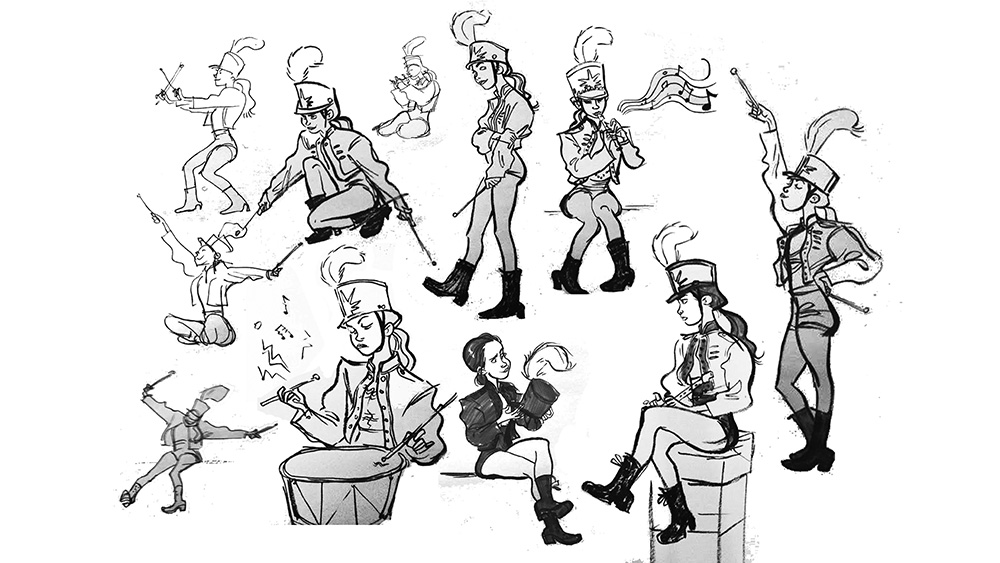
Drawing from life is an extremely helpful observational tool, whether information technology'south in a classroom or at your local café. Sketching and observing people around you can be beneficial in learning how to draw the human figure and the many emotions information technology tin exhibit.
Alternatively, there are life drawing classes. These tend to consist of a mixture of lengthy and short poses – poses gear up over a longer menstruation of time enable you to capture details and study human beefcake, while quick poses are better suited to the gesture drawing technique (see below).
05. Utilize gestures
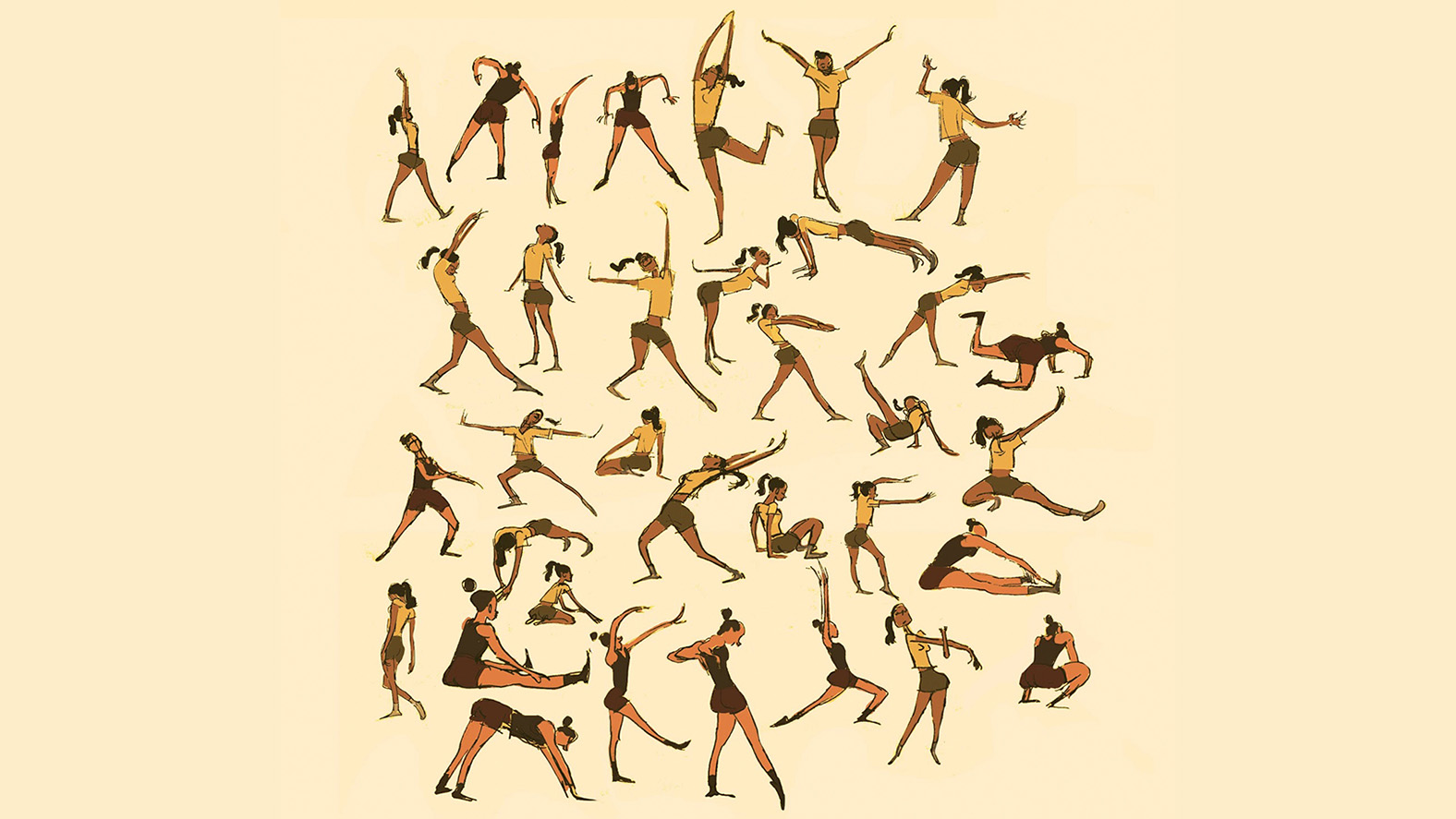
Gesture drawing is a quick way to capture the overall message of a figure. These observational drawings are ofttimes washed in very brusk segments – in a life-drawing class, the model may simply pose for 30 seconds, forcing the artist to go their kickoff impressions down on paper.
In this process of making deliberate and quick lines, try not to worry about how your art looks, or capturing details. You want to focus on the action or feeling of the pose.
06. Employ shape language
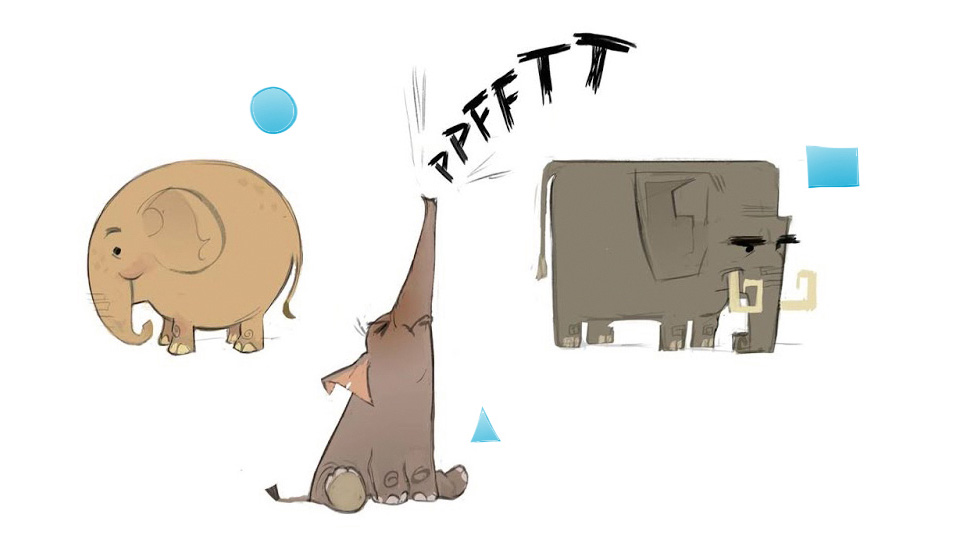
The use of unlike shapes is a major tool in grapheme pattern. Likewise equally helping to convey personality, shapes can too suggest movements or emotions.
A character made up of squares may feel more slow and stable, whereas 1 made up of triangles may requite off a more excitable feeling. Circles or curves are often used for more likable characters, and tin brand them experience friendly and bouncy.
07. Tilt and twist
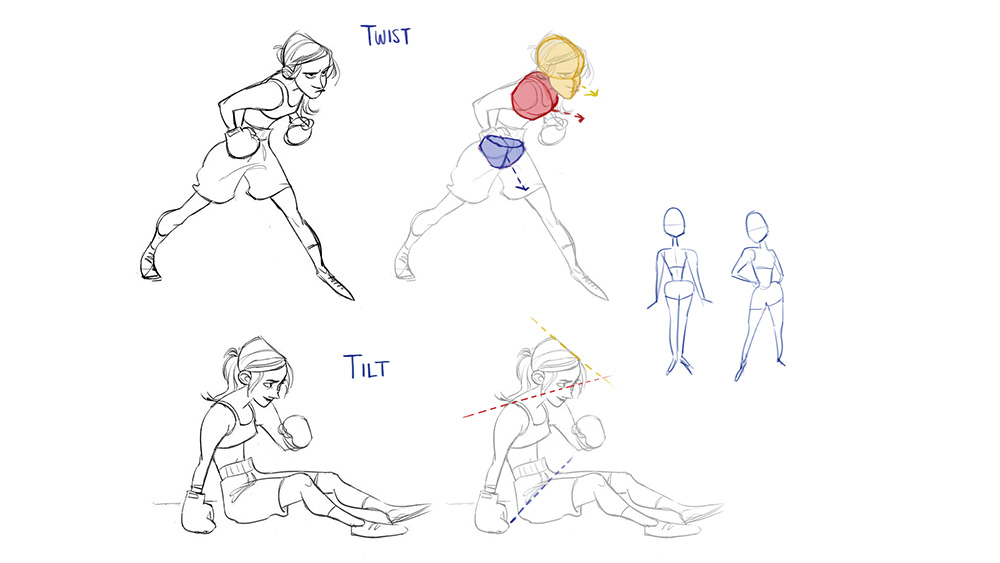
A simple way to create a more dynamic pose is to practise using tilts and twists. To assist avoid a static pose try using dissimilar angles. For instance, the angle of the character's shoulders could contrast with the angle of their hips. Instead of drawing with angles that are parallel, contrasting angles give the cartoon a feeling of menstruation and rhythm.
08. Apply squash and stretch
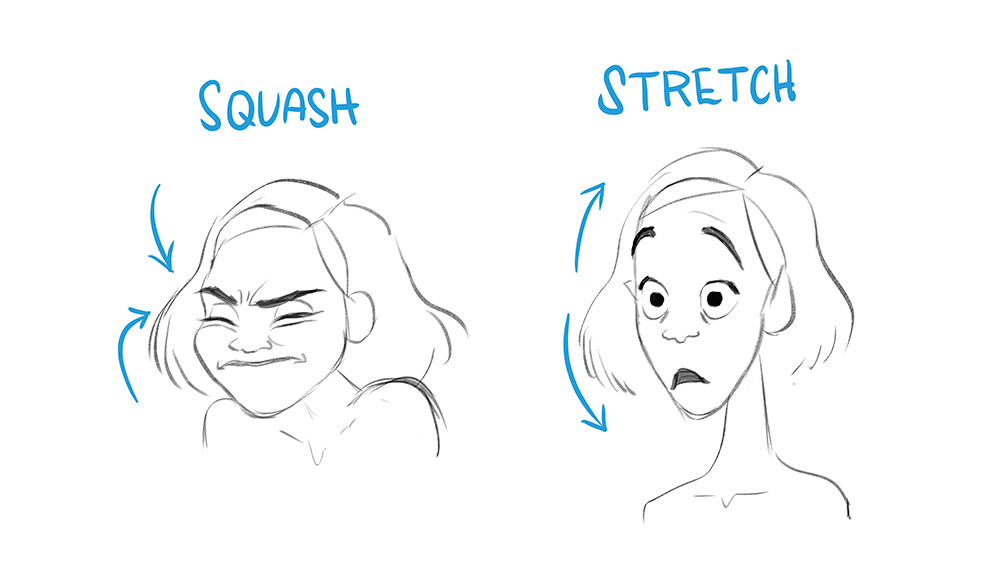
Every bit 1 of the 12 principles of animation, 'squash and stretch' is a useful technique in giving your drawing more life and energy. In animation a squash is ofttimes used as apprehension for a broader activity: the stretch.
The same can exist used in a static cartoon: A stretched pose acts as a moment when the character is creating their broadest action, while a squash in a drawing suggests tension.
Next page: read on for more tips to bring your characters to life...

Source: https://www.creativebloq.com/advice/how-to-draw-movement-16-top-tips
Posted by: smithwhossel.blogspot.com
0 Response to "How To Capture Movement In Drawing"
Post a Comment